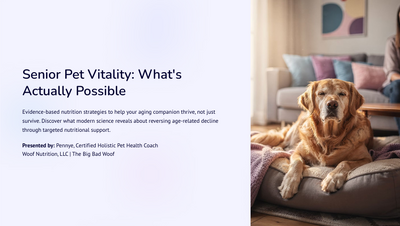
February Theme: Senior Pet Wellness & Vitality
Live Q&A Companion Summary
02 February 2026 | Summary provided from Recorded text by Claude.ai
This live session focused on supporting senior dogs and cats through three foundational pillars — digestion, protein needs, and inflammation — followed by open Q&A on individual pet cases.
THREE PILLARS OF SENIOR SUPPORT
1. Digestion first. Even a premium diet and good supplements can't be absorbed well if the digestive tract has deteriorated. Supporting the pancreas and digestive juices with digestive enzymes, and repopulating the gut with a daily probiotic, helps restore bioavailability. Bone broth (2–4 oz per meal) helps seal and rebuild the gut lining at the cellular level — homemade or a quality commercial version both work.
2. Protein — more, not less. The old advice to reduce protein in senior pets has been overturned by newer research: seniors actually need more protein to prevent muscle wasting, paired with reduced carbohydrates. Target ranges (dry matter basis): dogs 25–35%, cats 35–45%. Protein restriction is only appropriate at IRIS Stage 3–4 kidney disease — in stages 1–2, adequate protein actually supports the kidneys and prevents muscle loss. High-quality sources: eggs (a "perfect protein"), muscle meat, fish, and organ meat (capped at 10–15% of the diet).
3. Inflammation management. Cats are especially good at hiding pain and inflammation — reduced jumping or slower stairs are often the first visible clue. Core supports discussed:
Omega-3s at a therapeutic dose (most bottle-label doses are too low) — roughly 20–50 mg combined EPA/DHA per pound of body weight, built up gradually to avoid GI upset. Canned sardines or mackerel 2–3x/week is an easy way to add these.
Golden paste (turmeric + black pepper + a healthy fat, e.g. coconut oil, plus a little ginger) as a natural anti-inflammatory alternative to NSAIDs — turmeric can be hard on cats' digestion, so a cat-appropriate alternative may be a better fit for them.
Milk thistle, pulsed (6 days on/1 off, or 3 weeks on/1 off) as a liver protectant as pets age; dandelion + milk thistle blends offer a gentle detox option.
Joint support — glucosamine/chondroitin/MSM and/or UC2 collagen, sometimes combined for pets with more significant joint or connective tissue issues.
Cognitive support — starting early is ideal, but even established signs (nighttime pacing, disorientation, vocalizing) can improve with the right supplementation.
PEMF (pulsed electromagnetic field) therapy — mentioned as especially helpful for kidney disease and general senior support.
Traditional Chinese medicine / medicinal mushrooms — used for immune support and cognitive function in both species.
GETTING STARTED THIS WEEK
Week 1: Add digestive enzymes; begin building up to a therapeutic omega-3 dose
Weeks 2–3: Upgrade protein quality/quantity; introduce golden paste (dogs) or a cat-appropriate alternative
Ongoing: Reduce kibble ratio in favor of fresh food toppers; consider splitting meals into 3–4 smaller portions/day for easier digestion in seniors
A simple starter fresh-food addition: ground turkey with pumpkin or sweet potato — gentle enough to avoid digestive upset, usable as a topper or partial meal replacement.
Q&A HIGHLIGHTS
Chronic eye tearing in an older dog: Increased tearing with age, alongside a good diet, was linked to possible malabsorption — digestive enzymes plus bone broth for gut lining support were suggested as a next step. A history of parasites (Giardia, Parvo) in early life was flagged as a factor that significantly raises the likelihood of later digestive issues, including leaky gut — worth asking about when investigating a senior pet's GI history.
Recurring GI flare-ups in a dog with Cushing's disease, currently on a prescription veterinary diet: Transitioning off a prescription GI diet after a serious flare (weeks of diarrhea) is understandably approached cautiously. A gradual, appetite-first approach was recommended — testing freeze-dried or gently cooked options (e.g., a protein-forward recipe with goat milk or bone broth), checking current ACTH levels for context, and adding a multivitamin for nutritional coverage during the transition period.
CBD/CBG for cats: Cats have fewer cannabinoid receptor pathways than dogs but can still respond well to CBD; a cat-specific mobility soft chew (CBD/CBG blend) was suggested for a cat showing likely dental-related pain and early cognitive changes, alongside a multivitamin-with-mushroom formula for cognitive support.
Sundowning symptoms: Omega-3s and CoQ10 were named as simple starting points, with veterinary-grade nervous-system support formulas (e.g., a Standard Process neurological support product used off-label for pets) as a next-tier option once current labs are reviewed.
Muscle wasting in a small senior dog: An egg-yolk–derived muscle-support product was recommended as a trial option to help rebuild lean mass, alongside maintaining a careful weight balance for a pet prone to both weight loss and overweight tendencies.
Senior dental care and chew options: For dogs with few remaining teeth after extractions, soft training treats, soft jerky, and fish skins were noted as good longer-lasting chew options; commercial senior-specific soft toys were also mentioned as newly available in the store.
KEY TAKEAWAYS
Senior pet care isn't about doing less — it's about doing differently. More (not less) quality protein, smarter digestive support, and proactive anti-inflammatory nutrition together extend both health span and quality of life, even for pets carrying complex histories or existing conditions.
 Please log in or register to post a comment